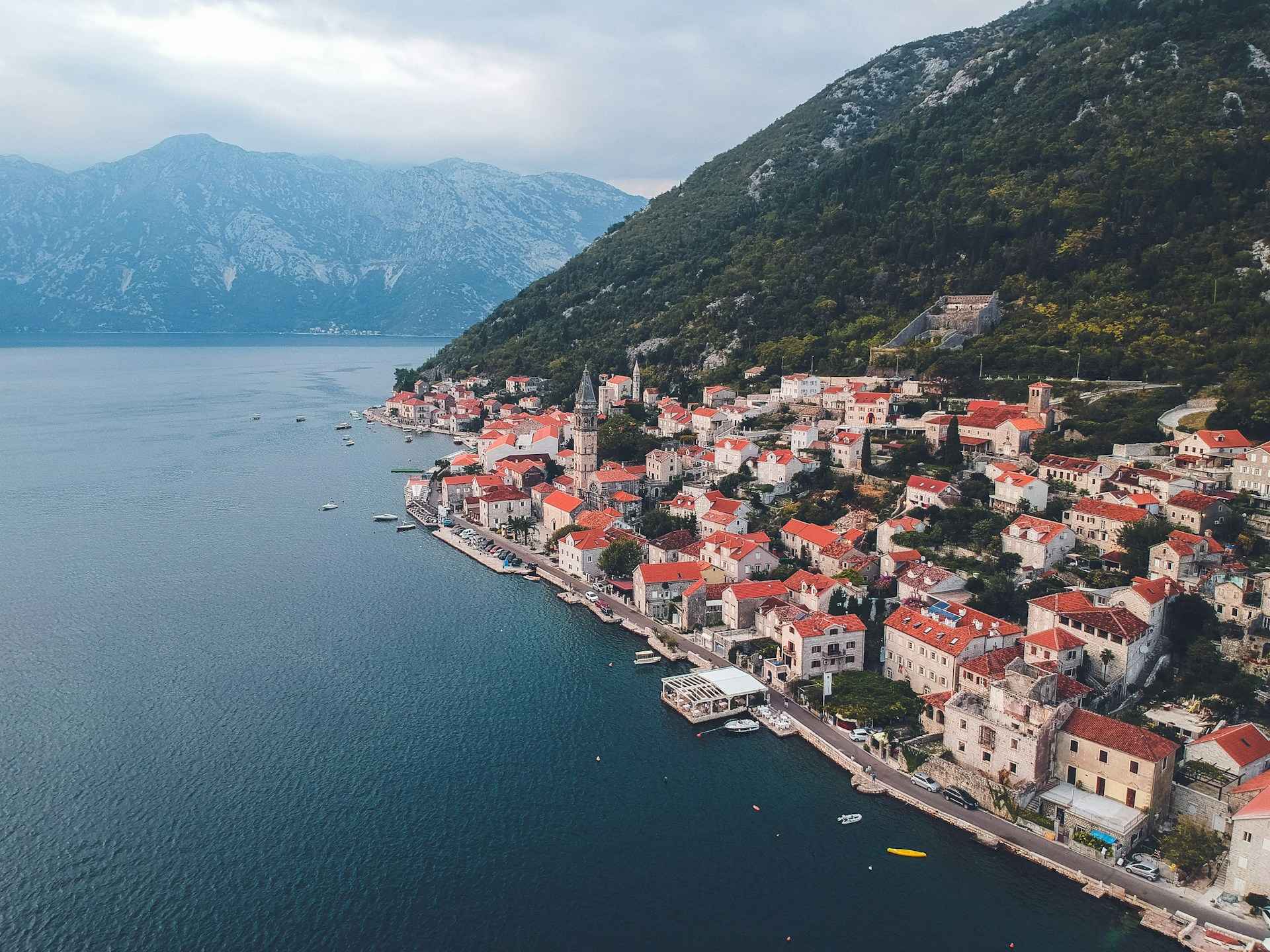
Montenegro Property Investment Amid Global Rate Uncertainty
Global uncertainty is making investment harder to price. One small country deserves a closer look.
We are seeing growing interest from American buyers looking to buy property in Montenegro, particularly in the coastal real estate market. It is an observation from our own clients and enquiries, and it has made the international economic backdrop increasingly relevant to our work.
In the United States, the cost of financing property has risen. In Europe, inflation concerns have brought renewed monetary tightening. In Japan, higher rates are changing the economics of a currency that has helped fund investments around the world.
These are different developments, but they lead to the same practical question: where can an investor put capital to work without depending too heavily on cheap debt or a favourable turn in financial markets?
Montenegro deserves a place in that discussion. The Montenegro real estate market recorded substantial price growth in 2025, that momentum continued into 2026, and its EU accession process has advanced. On the coast, selected developments also offer the possibility of combining a holiday home with professionally managed rental income.
The case for Montenegro property investment becomes clearer when those elements are connected, then tested against the property being purchased.
America, Europe and Japan: different pressures, a common financing question
On 10 September 2026, Freddie Mac reported an average US 30-year fixed mortgage rate of 6.76%, compared with 6.35% a year earlier. These figures cover conventional home-purchase mortgages rather than investment-property loans, but they provide a useful reference for the financing environment American buyers face.
For a property investor, higher borrowing costs narrow the margin between rental revenue and the cost of ownership. A purchase may still work, but vacancies, maintenance and weaker rents become more consequential when debt already consumes much of the income.
The uncertainty extends to the future cost of that debt.
Goldman Sachs Asset Management's third-quarter 2026 fixed-income outlook, by Kay Haigh and Sylvia Yeh, identifies persistent inflation and higher energy prices as reasons markets have reassessed interest-rate expectations. Their assessment sees risks to US Treasury yields tilted upwards and further pressure for Japanese rates to rise.
Mortgage rates do not move mechanically with central-bank policy. Long-term bond yields and lending margins also matter. An investor waiting for easier policy may still face expensive property financing.
Rising yields can also pressure the market value of existing fixed-rate bonds and equity valuations. This is one reason stocks and bonds do not always provide the diversification investors expect when inflation and interest-rate risks intensify together.
Japan adds another transmission channel. Investors borrowing cheaply in yen to purchase assets elsewhere face a different calculation when Japanese rates rise or the yen strengthens. Reducing those positions can transmit volatility internationally.
Reuters reported on 10 September that Bank of Japan board member Kazuyuki Masu warned that accelerating inflation could require rapid rate increases. Japan's policy rate stood at 1%, with markets expecting a further increase at the September meeting.
Europe faces a related challenge. On 10 September, the ECB announced a 25-basis-point rate increase, taking its deposit rate to 2.50% from 16 September. It projected inflation of 3.0% and economic growth of 0.9% for 2026, while highlighting uncertainty around the energy shock and future growth.
None of this establishes that investors should abandon those markets. It makes the financing structure and source of return more important when comparing the next investment.
For Montenegro, the implications are practical. Some international buyers may seek a euro property as part of diversification. Others may have less liquidity or take longer to decide. Our market benefits from international demand and remains exposed to buyers' financial conditions abroad.
Meanwhile, Montenegro property prices have continued to rise
Against that backdrop, Montenegro has maintained strong recent property-price momentum.
MONSTAT's annual new-build series shows an increase of approximately 19.3% in the national average transaction price in 2025 compared with 2024. Growth continued into 2026: the reported coastal average in the second quarter was approximately 21.6% above the same quarter of 2025.
These statistics cover first sales of new dwellings. They are transaction averages, so changes in the properties sold can affect the result. They establish recent momentum, rather than an appreciation rate applicable to every coastal apartment.
The distinction matters. An investor entering today needs to know what supports value from today's purchase price.
I work with international buyers and develop our own projects. For me, the useful comparison is between properties a client can actually purchase, the income they can reasonably produce and the market into which they could eventually be resold.
Recent growth gives investors a reason to examine Montenegro properties for sale. Property selection determines whether that growth story is relevant to their purchase.
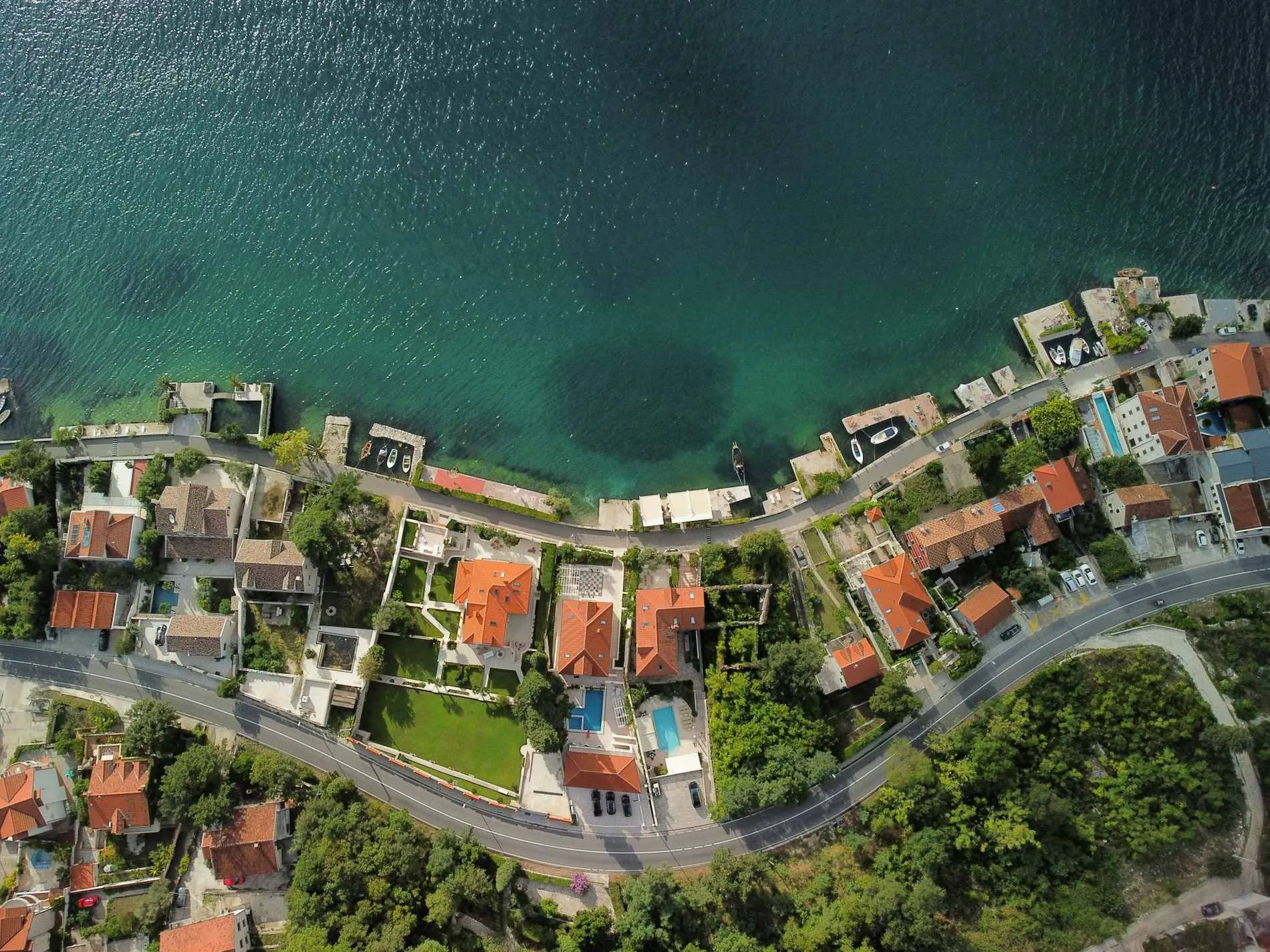
EU accession and the outlook for Montenegro real estate investment
By July 2026, Montenegro had provisionally closed 18 of its 33 EU negotiating chapters. The Council of the EU also records the establishment of a working party to prepare its accession treaty. These are concrete steps towards integration.
For a long-term investor, the potential value lies in reform and closer economic integration: stronger implementation of rules, more familiar standards and potentially broader investor participation.
That is an analytical case for future appeal, conditional on continued progress. It does not establish how much property prices will rise or when accession will occur.
Montenegro already allows investors to assess property prices and rental income in euros. For buyers with euro liabilities or spending needs, that can simplify the calculation. For an American buyer, it creates diversification while retaining exposure to the dollar-euro exchange rate.
Together, recent price momentum, the euro-based market and EU progress make the coast worth examining over a longer holding period. They can support the investment environment; the rental operation must still earn its income.
Choosing coastal property in Montenegro for investment
A €300,000 budget can lead to two quite different purchases.
In our market experience, around €4,000 per square metre is a practical benchmark for coastal properties in good locations. For five-star residential developments, around €6,000 per square metre is a more relevant reference. Actual prices depend on the location, product and terms.
Before additional acquisition and furnishing costs, those benchmarks imply roughly 75 m² in the conventional category or 50 m² in the five-star category.
For buyers comparing apartments for sale in Budva and Bečići, Tivat real estate or property in the Bay of Kotor, location and the rental model deserve separate assessment. The Budva real estate market and Kotor real estate market require different assumptions about guests, access and seasonal demand.
The larger apartment may suit a buyer who prioritises space and personal use. But more square metres do not necessarily produce more annual income, and the budget does not automatically secure a prime location.
If the building has no leisure facilities or hospitality services and its rental business depends mainly on summer visitors, the owner has a shorter earning season.
A one-bedroom apartment in a five-star branded residence in Montenegro, operated by an international hospitality brand, has a different proposition. Indoor leisure facilities, a spa, dining and professional guest services can help attract guests beyond summer. The operator's distribution network can support bookings and reduce the owner's day-to-day workload.
Those advantages have commercial value when they generate revenue sufficient to cover the associated costs. Year-round opening needs to be supported by year-round demand.
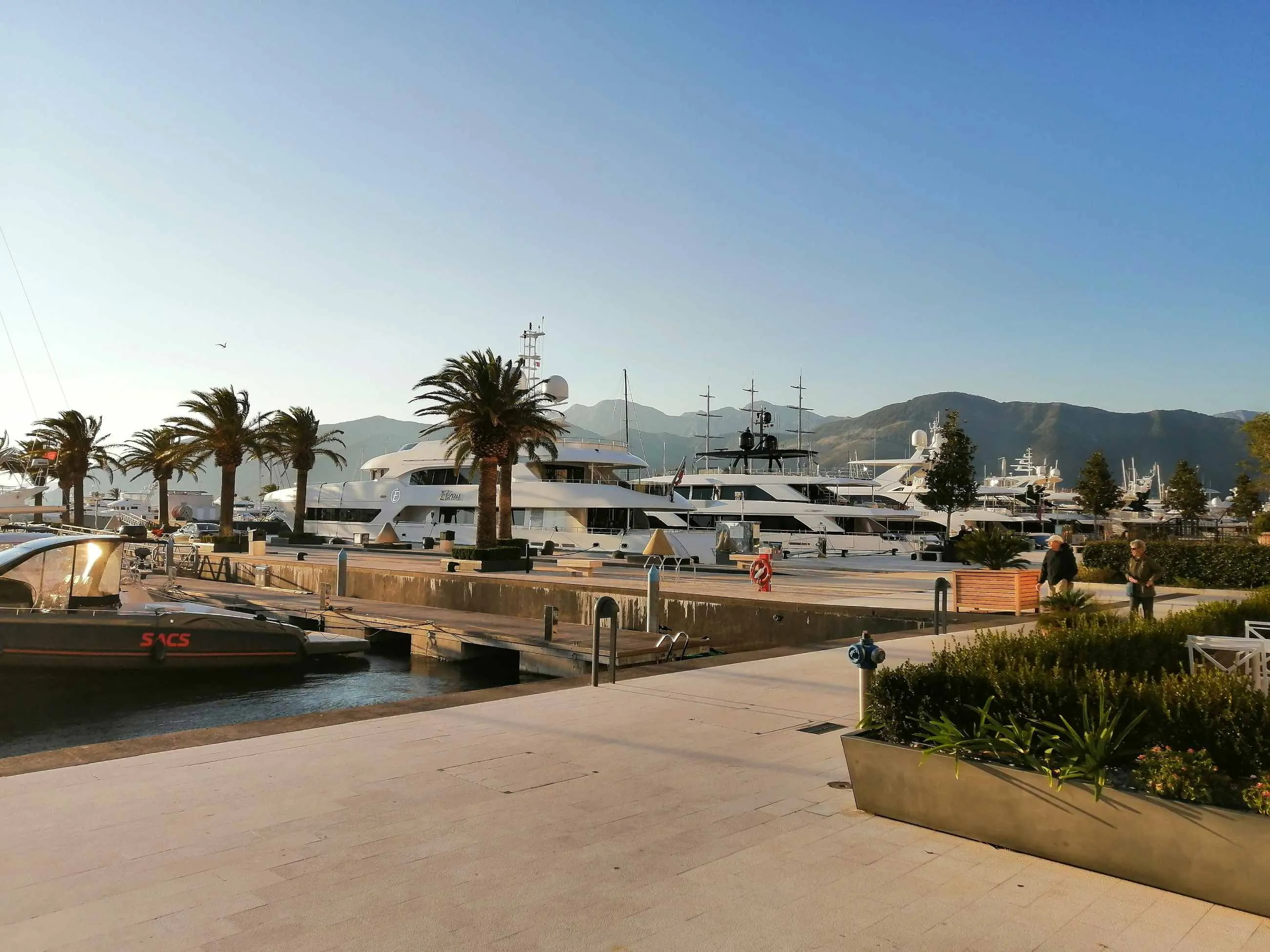
Rental yields in Montenegro: the same capital, two income calculations
Consider two illustrative scenarios, each based on €300,000 in total invested capital, including acquisition and setup costs.
The first is a conventional holiday apartment in Montenegro without amenities, rented mainly during summer. Annual revenue of €24,000 represents an 8% gross yield. After €9,000 in operating expenses, the owner retains €15,000, equivalent to 5% before applicable income tax and financing.
The second is a one-bedroom serviced apartment in a five-star residential project in Montenegro, operated throughout the year by an international hospitality brand.
An 8% return after operating costs and applicable taxes requires €24,000 in annual income remaining to the owner. One illustrative route is €40,000 in gross rental revenue, with €16,000 covering all operating charges and applicable taxes.
| Illustrative annual calculation | Seasonal apartment without amenities | Five-star operated residence |
|---|---|---|
| Total invested capital | €300,000 | €300,000 |
| Gross rental revenue | €24,000 | €40,000 |
| Deductions | €9,000, excluding income tax | €16,000, including applicable taxes |
| Income remaining | €15,000 before income tax | €24,000 after taxes |
| Return before financing | 5% before income tax | 8% after taxes |
The higher net return requires substantially higher revenue. That is the assumption to test through comparable operating results, realistic occupancy and achieved rates outside peak season.
The five-star calculation must include management and distribution fees, service charges, maintenance reserves, furniture replacement and the owner's applicable taxes. The €16,000 deduction is an illustrative combined allowance, not a quoted fee structure or tax calculation.
Owner use belongs in the model too. Spending the highest-demand summer weeks in the apartment has a financial cost, even when the holiday-home benefit makes that choice worthwhile.
For an investor seeking income alongside personal use, I would seriously consider a well-located five-star residence with a credible operator. Its appeal is the hospitality business supporting the apartment. I would want the contract and operating evidence to substantiate that appeal.
Buying off-plan property in Montenegro: purchase terms complete the comparison
Selected off-plan developments in Montenegro allow payments during construction. For buyers using their own capital, this can preserve liquidity and avoid conventional mortgage interest.
That flexibility becomes particularly relevant when alternatives involve expensive borrowing. It also brings future payment obligations, construction risk and a wait before rental income begins.
The developer's finances, permits, milestones and contractual protections therefore belong in the same assessment as the eventual rental model.
A credible proposal connects the purchase terms, delivery, operating income and resale case. It does not rely on appreciation to compensate for weak rental economics.
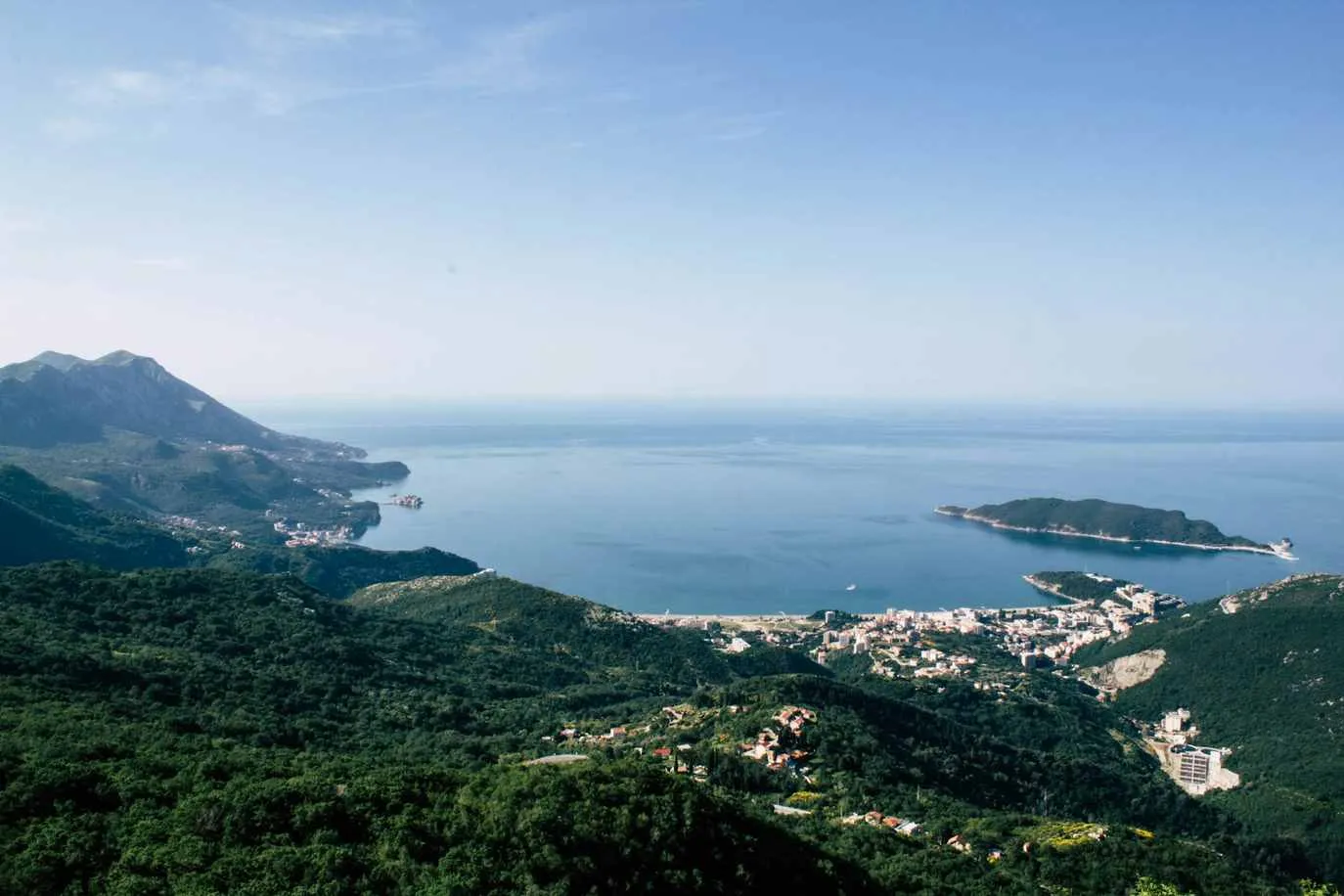
Montenegro's coastal real estate market deserves a closer look
World Politics Review's recent article raises an important question about Montenegro's reliance on foreign investment in property. Its accessible opening asks what that capital leaves behind in productive capacity and resilience. That question deserves attention, especially when discussing rental operations and hospitality services.
The central bank's figures also show that foreign real-estate investment fell 10.66% year on year in Q1 2026. Recent price growth has therefore coexisted with a decline in that quarterly capital inflow.
Montenegro's coast is not insulated from international uncertainty. Its appeal is that investors can evaluate a different combination of risks and returns: a euro property, potential operating income, selected payment flexibility and a country progressing towards EU membership.
For the right buyer, that combination may compare favourably with a property investment heavily dependent on expensive debt. The stronger case is a purchase whose rental income, financing and ownership terms can be examined in detail.
That is why the growing American interest we see matters. It brings Montenegro into a wider investment comparison, and gives our industry an opportunity to present the coast with substance.
If you are looking to buy property in Montenegro, I am happy to compare suitable coastal apartments and holiday homes for sale with you, including the payment structure, seasonal or year-round operation and income realistically remaining to the owner.