
Welcome!
There are many stories and legends which might give you an indication of where the ‘Black Mountain’ name for Montenegro comes from, but in order to understand it’s true origins we have to take you back to the time of the 15th Century when much of the country was ruled by local Noble families of the Zeta Medieval Principality.
Before we do that though, let’s go back further in time to when Montenegro is first found mentioned in a papal epistle from 1053 – and is referred to as Monte Nigro. Only a small piece of land back then, ruled by a local tribe, which became part of a much wider region ruled primarily by the Venetians who occupied the towns of Kotor and Budva, up until the end of their empire in 1797.
Zeta’s leader at the time of 1482 was Ivan Crnojević, and in order to better protect his lands, he actually set up a new capital deep in the mountains, right at the foot of Montenegro’s most famous Mountain, Mount Lovcen. Called Cetinje, it proved a nightmare to get to for Montenegro’s enemies, which of course worked in it’s favour, however, it also proved extremely difficult for Venetian merchants who wished to sell their wares and trade with the city. Starting with the city walls at Kotor, they had to travel up and over the mountain before reaching the city, leading them to refer to the area as the ‘The Place over the Dark Mountain’. Of course, the Mountain they were referring to was Lovcen, which is now a major National Park, and which is where many people would say that Montenegro itself was born.
Lovcen has a lot going for it, and it’s obvious to see why Zeta’s leader chose to build an impenetrable city here but in addition to that, it’s also obvious to see why it attracts thousands of visitors per year. The views from the peak are simply outrageous with stunning panoramic vistas of the surrounding hills and valleys plus just below the peak is the resting place of Petar II Petrović-Njegoš who was a Prince-Bishop of Montenegro during the 19th Century. He’s remembered as a National Hero, poet and philosopher whose’ writings are extremely popular throughout the cultural landscape.
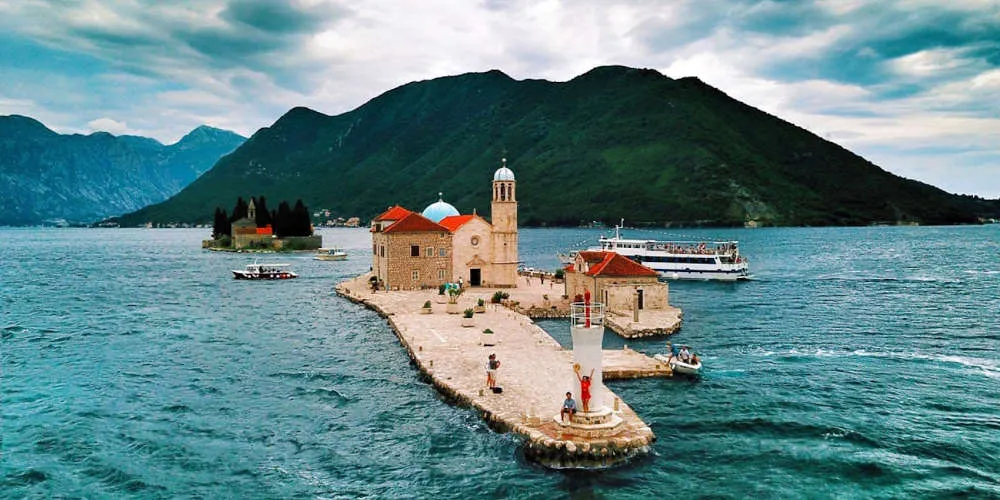
So, now you know the real reason for the ‘Black Mountain’ let’s just consider some of those other stories, which include the sailors who named it so because of the mountains surrounding The Bay of Kotor which reach directly from the water into the Sky, or the people who named it so because of the incredibly dense forests in Northern Montenegro, making them look almost black to outsiders. Which story do you prefer?
Whatever you believe to be the truth – it’s worth coming to experience it for yourself… and CMM Montenegro are on hand to give you further information if you require it.

